
Checking Criminal History in Suffolk County
No one search holds every Suffolk County criminal record. Start with the event you need to prove. A future court date belongs in WebCrims. A certified felony outcome belongs with the County Clerk or the recent-file office in County Court. A current jail admission belongs with Sheriff Central Records. A statewide fingerprint history is available only to the subject through DCJS Personal Record Review. This division matters because an arrest report, court docket, jail file, and repository cycle can all describe the same event from different points in time.
Gather the full name, spelling variants, birth date when the official channel permits it, arrest date, court, and any docket or indictment number. Then use the narrowest official source first. A name match alone is not proof of identity. Compare the court, middle initial, case number, and known dates, and order a certificate when the outcome must be confirmed.
- Search WebCrims Defendant Search for a public pending case or future appearance.
- Call the responsible clerk when a known case is absent, closed, sealed, or held by a town or village justice court.
- Ask Sheriff Central Records about current Suffolk County custody, or use the arresting agency for its own incident report.
- Request the Suffolk County Clerk’s $5 certificate for a felony disposition, or contact District or Justice Court for a lower-level disposition.
- Use DCJS Personal Record Review to inspect and, if needed, challenge your own statewide fingerprint record.
Four Suffolk Criminal Record Answers
Suffolk County records answer four distinct questions. The police report says what an officer documented and which charges were asserted at arrest. The Sheriff admission file says when a person entered local custody and where the person was held. The clerk’s file says what prosecutors filed, what happened in court, and how the case ended. DCJS links a fingerprinted arrest cycle to later disposition reports. None replaces the others.
The flow is: arresting agency record → Sheriff booking when jailed → arraigning and trial court file → disposition report to DCJS. Charges can change at each point. A booking allegation may be reduced, replaced in an indictment, dismissed, or followed by an acquittal. If a DCJS response says no disposition was reported, get a certified result from the Suffolk County court that held the case and use the challenge instructions sent with the record.
- Arrest cycle
- The DCJS grouping that joins one fingerprinted arrest with later charge and disposition reports.
- Disposition
- The recorded outcome of a charge or case, such as dismissal, acquittal, or conviction.
- Certificate of disposition
- A court-certified summary showing how a specific case ended.
- Booking
- The jail intake process, including identity checks, property, charges, classification, and a Suffolk Sheriff PIN.
New York Official Background Checks
The New York State Division of Criminal Justice Services Personal Record Review is the official state path for a person to inspect their own fingerprint-based history. DCJS does not offer a general-public name search. The requester selects a suppressed or unsuppressed response, schedules Live Scan collection through IdentoGO, and receives the result by U.S. mail. Service code 15464Z is for a suppressed record and 15465F is for an unsuppressed record. DCJS lists a fee-waiver route for eligible applicants.
The official DCJS page shows the two self-review choices and the correction path. Its layout is captured below from the state source.
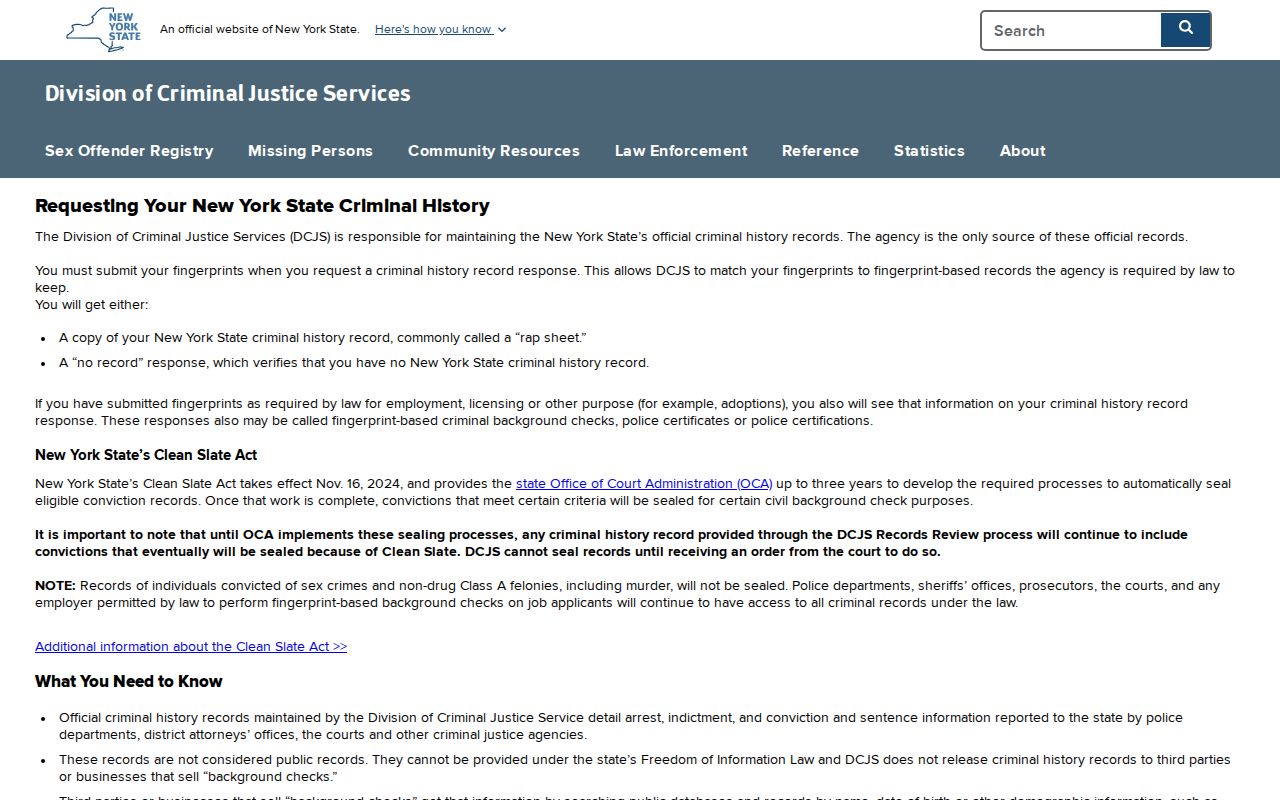
This record is broader than a single Suffolk County court file, but it is subject-only and depends on fingerprint and disposition reporting.
Fingerprint collection is booked through the IdentoGO enrollment portal or by calling 877-472-6915. As of February 2, 2026, DCJS lists $17.50 for in-state enrollment and $47.50 out of state, with results generally mailed in three to four weeks. The enrollment site asks for the service code, contact and biographic data, an appointment place and time, and identity-document details.
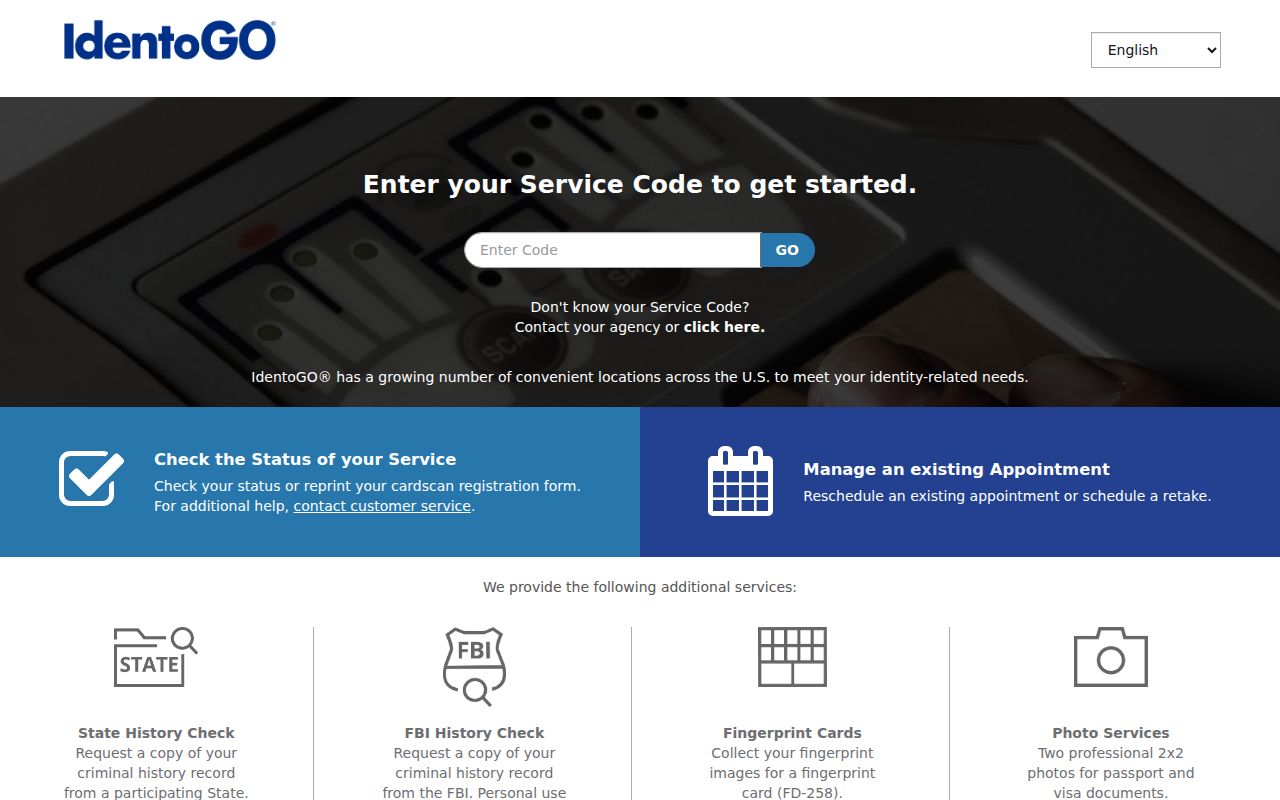
Locations and hours are dynamic, so the live locator is more reliable than a fixed storefront address.
Suffolk Criminal Courts Split East
Geography changes the record route. The First District Court Criminal Term at 400 Carleton Avenue in Central Islip handles misdemeanors, violations, and felony arraignment work for the five western towns. Its public criminal windows operate Monday through Friday from 8:30 a.m. to 4:30 p.m. A pending misdemeanor date or District Court certificate starts there, not at the County Clerk.
Felony records center on Riverhead. Suffolk County Court’s Criminal Office is at 210 Center Drive, and older felony files move to the County Clerk’s Criminal Court Actions Unit at 310 Center Drive. County Court lists 631-852-1461 for felony matters about three years old or newer; the County Clerk lists 631-852-2000 for its archive. Town and village justice courts remain important outside the western District Court system. A miss in WebCrims or at one counter therefore does not settle the question.
District Court Criminal Term
400 Carleton Avenue
Central Islip, NY 11722
631-208-5800
Public windows: weekdays, 8:30 a.m. to 4:30 p.m.
County Clerk Criminal Actions
310 Center Drive
Riverhead, NY 11901
631-852-2000
Felony archive and certified disposition channel.
Criminal Record Types
Suffolk County criminal records stay with the office that created them. Incident and arrest reports belong to the arresting police agency. Sheriff files cover county jail admission, custody movement, release, and related correctional activity. The responsible criminal court keeps accusatory papers, appearances, motions, orders, pleas, trial results, and sentences. DCJS maintains the fingerprint-based state history, while DOCCS maintains state incarceration and community-supervision data.
- Agency report: documents the reported event, police response, probable cause, and charges asserted at arrest.
- Booking record: reflects jail intake, custody site, charges or holds, and release processing, but not guilt.
- Court case file: tracks filed charges, appearances, motions, disposition, and sentence.
- Warrant record: comes from a court and is not shown in public WebCrims results.
- Supervision record: separates county probation from state parole or community supervision.
- Registry listing: contains only the public information authorized by New York’s sex-offender disclosure law.
The source also controls access. Police and Sheriff agency records can be requested under FOIL subject to exemptions. Court records run through clerks and court rules. DCJS criminal-history dissemination is controlled by state law and is not a public browse tool.
Suffolk Custody Records Without a Roster
The county page labeled Inmate Lookup did not provide a working public search interface during research. The reliable Suffolk County fallback is Sheriff Central Records at 631-852-2241, which is open around the clock for bail-information purposes, together with VINELink for local custody and release notice functions. Historical admission material can be sought through the Sheriff’s FOIL channel. A focused request gives the person’s name, birth date, six-digit Sheriff PIN if known, admission range, committing agency, facility, and release information sought.
Riverhead Correctional Facility at 100 Center Drive South has a listed capacity of 840. Yaphank Correctional Facility at 200 Glover Drive has a listed capacity of 976. These are local detention records. A person transferred after sentence belongs in the DOCCS Incarcerated Lookup, while federal custody belongs in the Bureau of Prisons system. A Sheriff search should not be expected to answer either state or federal custody.
Note: Suffolk County has no verified Sheriff or police mobile app for inmate, warrant, or police-report searches.
Inside a Suffolk County Criminal Record
The fields depend on the source. A public court result reveals less identity data than a fingerprint history. A Sheriff booking file focuses on intake and custody, while a clerk file focuses on litigation. Reading the label at the top of the record is as important as reading the charge. It tells you which office made the entry and what the document can prove.
| Name and identifiers | Name, aliases, birth information, physical descriptors, NYSID or fingerprint transaction identifiers where legally available. |
|---|---|
| Arrest and booking | Arrest date, agency, tracking number, alleged charges, admission, Sheriff PIN, facility, and release processing. |
| Court case | Docket or indictment number, court, filed and amended charges, appearances, motions, pleas, orders, and trial events. |
| Disposition | Dismissal, acquittal, conviction, disposition date, and certificate details recorded by the holding court. |
| Sentence | Custody, probation, fine, restitution, or other terms entered by the court. |
| Custody or supervision | Local admission and release, state incarceration, county probation, or state community-supervision information. |
A same-name court hit should be checked against the case number, venue, birth year when displayed, and known event dates. Protected identifiers should not be sought merely to force a match.
Suffolk Fingerprints Reach DCJS
A fingerprintable Suffolk County arrest creates a state reporting chain. The booking agency sends fingerprints and arrest-event facts to DCJS, which associates them with a New York State Identification number. The prosecutor may change the allegations. The arraigning and trial courts then create their own case records, and the final disposition is reported back to DCJS. Delays, old paper records, or mismatched identifiers can leave the cycle incomplete.
When the person’s own Personal Record Review is wrong, use the challenge directions delivered by DCJS. A certified felony disposition comes from County Court or the County Clerk, based on the file’s age. A misdemeanor result comes from District Court or the town or village justice court. That certified paper is stronger proof than a commercial compilation.
WebCrims can help find a pending Suffolk County case, but its search limits must be understood. Use these fields on the official form.
| Field | Use | Suffolk note |
|---|---|---|
| Defendant last name | Required on the local name path | Use at least the first three letters |
| Defendant first name | Required on the local name path | Use at least the first two letters |
| Middle initial | Optional narrowing field | Helpful with common names |
| County and court | Optional filters | Select Suffolk and the likely court |
| Case number | Alternate search path | Preserve hyphens, zeroes, and suffix letters |
Public Access Laws in New York
New York law draws separate lines around agency, court, repository, sealed, and registry records. The Freedom of Information Law presumes access to agency records but allows privacy, safety, and law-enforcement redactions. Court clerks instead search and certify their own files under court law and rules. A FOIL officer need not create a new report or answer a question; the request must reasonably describe an existing record.
Key Suffolk County record laws:
Public Officers Law Article 6 sets agency-record access, response, exemption, and appeal rules.
Judiciary Law §255 directs court clerks to search and certify records on payment of lawful fees.
Executive Law §837 assigns DCJS its criminal-history and identification duties.
CPL 160.50 seals favorable terminations subject to listed exceptions.
CPL 160.57 establishes Clean Slate automatic sealing for eligible convictions.
FOIL generally permits photocopy charges up to 25 cents per page no larger than 9 by 14 inches unless another statute controls. Electronic production can reflect permitted actual costs. A written denial must state appeal rights, and the appeal normally goes to the designated officer within 30 days.
Suffolk Probation and Parole Records
Probation is county-run, while parole is state-run. The Suffolk County Probation Department supervises local probation sentences from Yaphank and satellite offices. There is no public county probationer search. The sentencing court can show that probation was imposed, and a former probationer may request a closed-case letter by mail or fax using the department form.
The department’s official office page explains local functions and request routes.
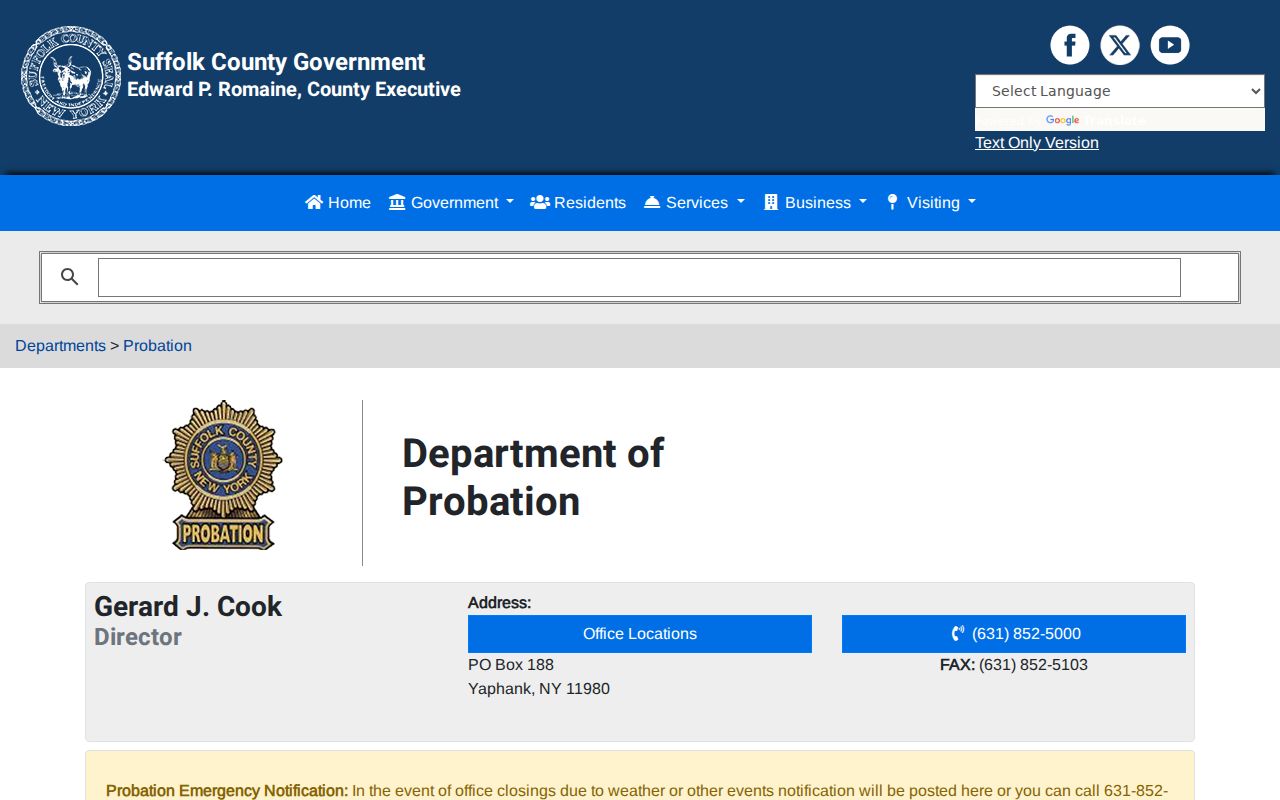
That agency record is not interchangeable with the public sentence recorded by the court.
Suffolk County has probation offices in Yaphank, Riverhead, Edgewood, Central Islip, Coram, and Hauppauge. The official location directory is the best source for the current office tied to a case.
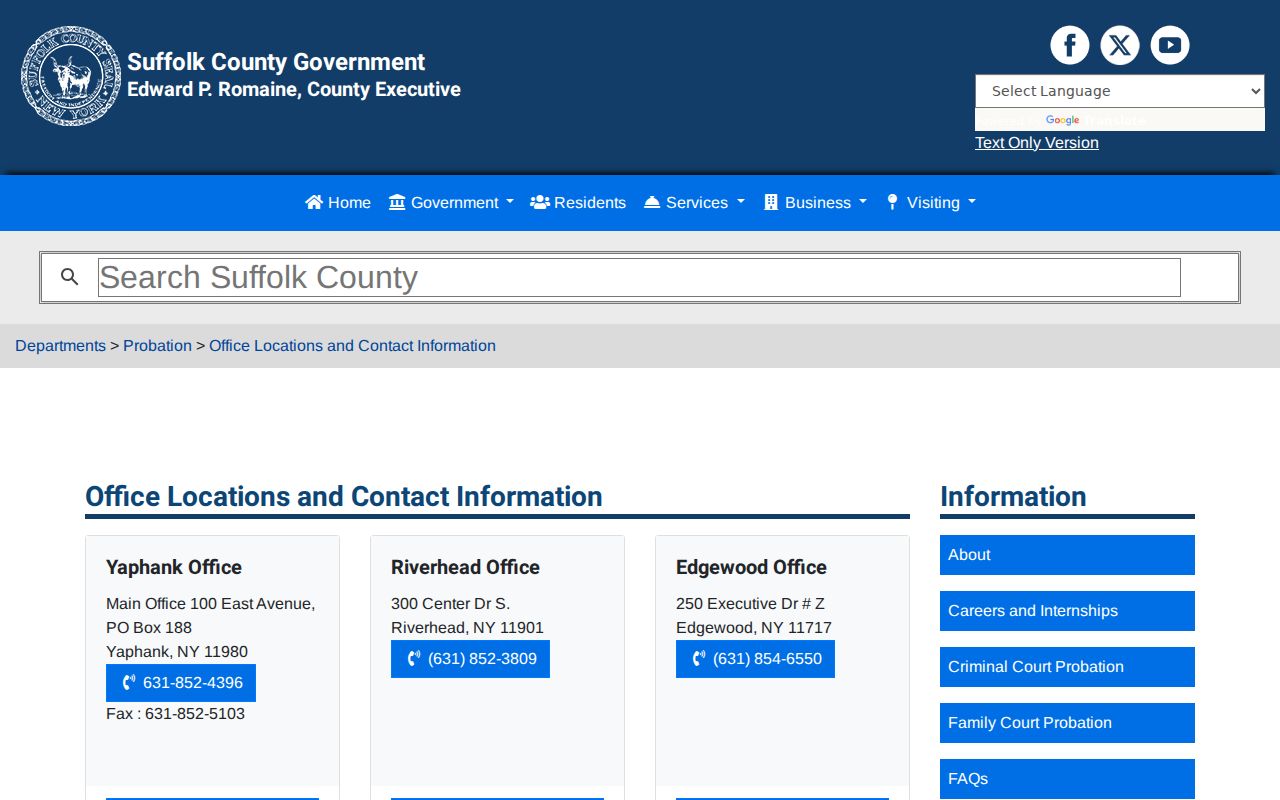
State parole and community supervision belong to DOCCS, whose Suffolk Area Office is in Bohemia and whose lookup uses DIN, NYSID, name, and birth year.
Sealed, Expunged, and Restricted Records
Record sealing is New York’s main adult relief. CPL 160.50 generally seals a case that ended in the accused’s favor. CPL 160.59 permits application-based sealing for qualifying convictions within its limits, and CPL 160.57 creates Clean Slate automatic sealing after statutory periods for eligible convictions. Specific marijuana matters receive expungement treatment. Juvenile, youthful-offender, grand-jury, victim, and sealed files also have distinct access rules.
A Suffolk County filing begins with a certificate of disposition from the court that holds the case. Felony certificates are available for $5 through the correct Riverhead office. Lower-level certificates come from District Court or the responsible town or village justice court. Use the New York Courts sealing instructions, file in the sentencing court when an application is required, and complete any required notice to the prosecutor.
Sealing restricts ordinary public view. It does not promise physical destruction of each government copy, and authorized access can remain. After relief, check that the clerk updated the case and review your own DCJS response. Clean Slate implementation is still underway, with the court system’s statutory implementation deadline listed as November 16, 2027.
Federal Criminal Records in Suffolk
Federal cases are separate from Suffolk County and New York court systems. The Eastern District of New York covers Suffolk, and the federal courthouse at 100 Federal Plaza in Central Islip handles local federal matters. Its main number is 631-712-6000, with docket and records help at 631-712-6010. The official Eastern District website carries court notices and office details.
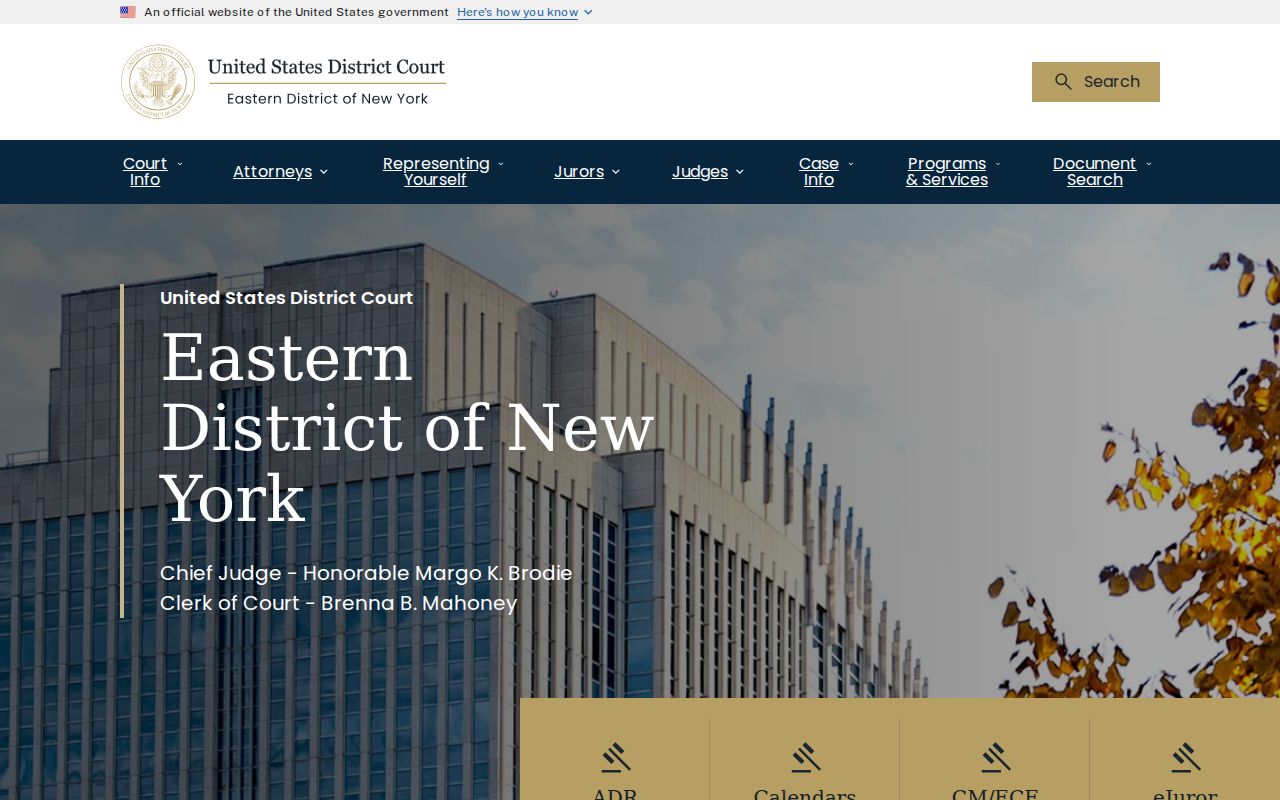
A county clerk, Sheriff desk, or WebCrims search will not produce that federal docket.
PACER is the authoritative online federal case-access system. It requires registration and charges under the current federal fee schedule, with small quarterly totals waived at the posted threshold.
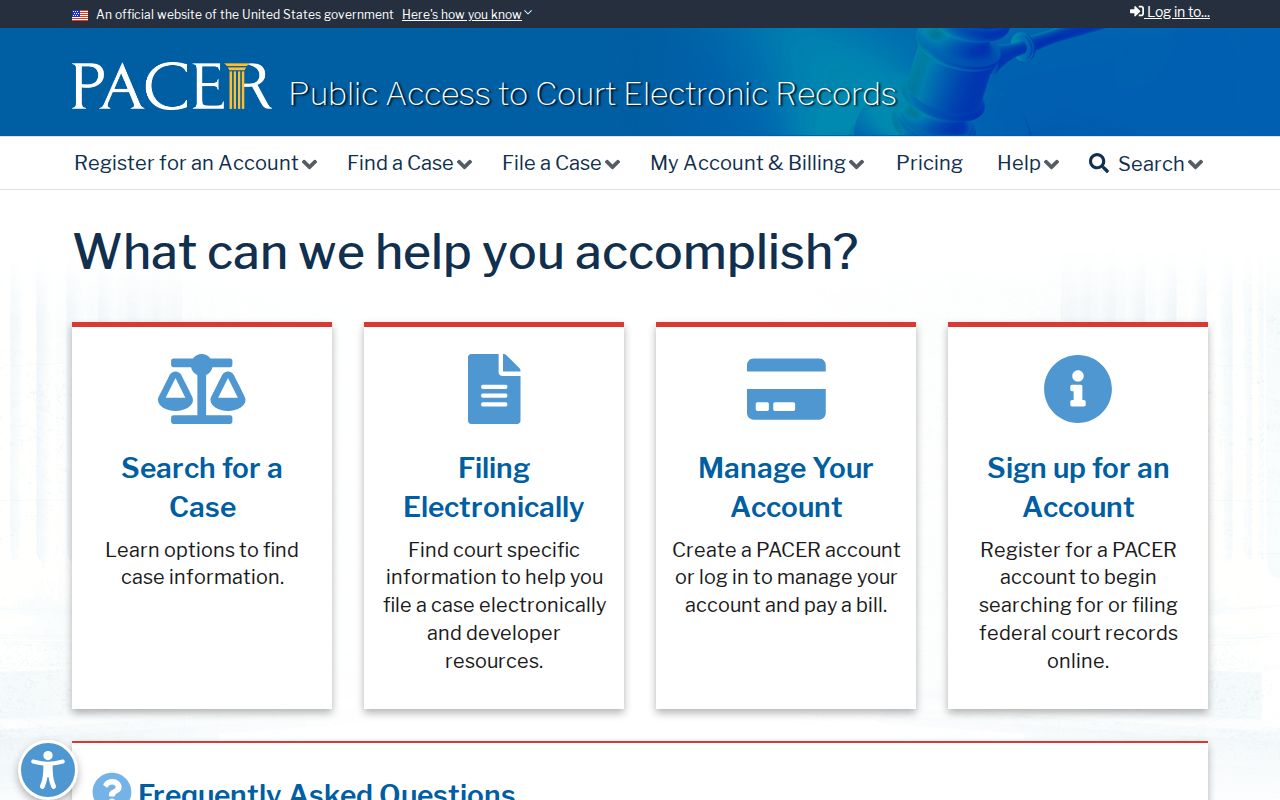
Federal custody is searched through the Bureau of Prisons, while an FBI Identity History Summary is a separate subject-only fingerprint product rather than a case search.
Suffolk County Criminal Records by City
Suffolk County has no incorporated cities, so no city criminal-record pages are published. The county’s official municipality catalog identifies ten towns and its incorporated villages but no city. Populous places such as census-designated communities cannot be substituted, and a village cannot be relabeled as a city. Local records still divide among Suffolk County Police, East End town departments, village police, District Court, and town or village justice courts. Search by the agency and court with legal jurisdiction rather than by an invented city category.
Suffolk Justice Programs Shape Records
Suffolk County’s named programs can change the route and terms recorded in a case. Veterans Court operates in Courtroom D-33 at the Central Islip complex. Judicial Diversion addresses eligible drug-dependent felony defendants. Mental Health Court handles qualifying cases in which mental illness contributed, and East End Regional Intervention Court serves Riverhead and Southampton Town Courts. Entry depends on the court and program rules. A searcher should read the case outcome instead of assuming that referral alone means dismissal or sealing.
Custody records also connect to local programs. Yaphank houses the START Resource Center, the Sheriff’s Addiction Treatment Program, a Veterans Pod, a 55+ Pod, and Choose to Thrive. These programs may be meaningful to the person involved, but the public record remains split among the Sheriff’s custody file, the court’s sentence and orders, and any probation record.
Suffolk’s record geography has deep roots. A Riverhead jail built in 1911 soon exceeded its intended capacity, and Yaphank’s Penal Farm opened in 1961. Stone from the old octagonal jail now surrounds the flagpole at the Riverhead facility. That history helps explain why today’s county record system still spans Riverhead, Yaphank, Central Islip, county police precincts, East End departments, and many local courts.